- 10× faster gas transfer delivered as a zero-CapEx liquid drop-in additive, validated at bioreactor scale
- Up to 4× biomass output with up to 70% less airflow across bacteria, yeast, and mammalian cell systems
- Applicable across aerobic fermentation, CO₂ gas fermentation, and biologics manufacturing, and compatible with existing tanks and infrastructure
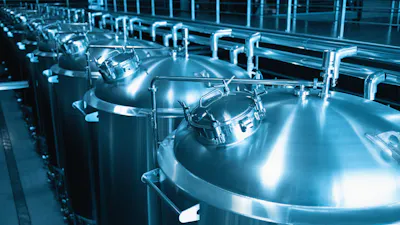
Dispersible Gas Carriers: Enhancing Efficiency in Biomanufacturing
Gas transfer-enhancing technology solves biomanufacturing’s gas delivery bottleneck, increasing productivity across existing bioprocesses
Interested in collaborating on this technology and helping to bring it to production facilities?
FluxBio is currently seeking industry partners for further validating its dispersible gas carrier technology in other processes, as well as investors to support the next phase of scale-up and commercial deployment. If you are interested in exploring a feasibility story, longer-term collaboration, or investment opportunity, please reach out to us.
Platforms
Sustainable Futures, Synthetic Biology
Team Leads
Key Features
By bringing its innovative gas-transfer technology to market, FluxBio will help biomanufacturers increase production while lowering their costs and environmental impact
The Problem
The bioeconomy is being held back not by biology, but by the physics of getting gas into water at scale to support bioproduction by microbial and mammalian cells. Oxygen (O₂) and other gases are poorly soluble in water, and dissolving them at scale requires mechanical sparging and mixing systems that cause foaming, shear stress, contamination, and uneven gas distribution throughout the reactor. Operators respond by adding more air, more power, dosing antifoam chemicals, and finally building bigger tanks. Each workaround adds cost and complexity while throughput stays capped. Gas transfer failure at scale is one of the primary reasons biomanufacturing processes fail to reach commercial viability, and it affects all manufacturing processes, ranging from industrial enzymes and high-value edible (single-cell) proteins to biologics and precision fermentation of many commodities. The resulting high energy costs, oversized infrastructure, and chronically underperforming reactors are locking the bioeconomy well below its potential.
Our Solution
Research at the Wyss Institute and Harvard’s Department of Chemistry and Chemical Biology, led by Associate Faculty member Jarad Mason, Ph.D., culminated in a fundamentally new class of fluids with intrinsic porosity: Engineered microporous crystals that are dispersed in water create a stable colloidal system—termed “microporous water”—with hydrophilic (water-loving) exteriors and hydrophobic (water-repelling) internal pores that adsorb and concentrate gas. The result is an aqueous medium that carries up to two orders of magnitude more O₂ (and other gases) than conventional fermentation media, enabling gas transfer rates up to 10-times higher. Published in Nature in 2022, this gas transfer-enhancing technology functions as a concentrated liquid drop-in, which can be introduced directly into existing bioreactors, with no other capital investments needed.
Product Journey

To realize the full potential of the dispersible gas carrier technology for biomanufacturing, Prof. Mason, who also is the John L. Loeb Associate Professor of the Natural Sciences at Harvard’s Department of Chemistry and Chemical Biology, teamed up with Marika Ziesack, Ph.D., a Senior Scientist at the Wyss Institute. With over a decade of experience in synthetic biology and metabolic engineering and having previously co-founded and served as CTO of a biomanufacturing startup, Ziesack brought firsthand knowledge of the scale-up challenges that Mason’s technology is designed to address.
In a DARPA-FAARM-funded program co-led by Harvard Professor Dan Nocera, Ph.D., and Wyss Institute Core Faculty member Pamela Silver, Ph.D, the team demonstrated the potential of the dispersible gas carrier technology in aerobic gas fermentation using a Cupriavidus necator microbe that was metabolically engineered to produce polyhydroxyalkanoates (PHAs), biodegradable polymers that can replace fossil carbon sources in many industrial processes. The team showed that their technology enabled a 4-fold increase in biomass and a 3-fold increase in PHA production relative to conventional aeration conditions.
To enable the next phase of validation, which was funded by the Wyss Institute Validation Program within the REFINE project, the team scaled the manufacturing of the dispersible gas carrier from gram to kilogram quantities. Through this project, Ziesack worked with Wyss Principal Scientist Emily Stoler, Ph.D., to extend these findings into a more widely used aerobic sugar fermentation process at 2L bioreactor scale. The introduction of the dispersible gas carrier more than doubled biomass output while reducing airflow by 70%, lowering stirring energy consumption by 55%, and eliminating the need for antifoam agents. In collaboration with external partners, the team further demonstrated the utility of their technology in eukaryotic systems by demonstrating that it achieved greater than 150% biomass production in yeast cultures and confirming its compatibility with mammalian HEK293 cells.
In 2026, after having extensively de-risked manufacturing scale-up and product-market fit and demonstrating the technology’s potential to enhance reactor-based bioproduction across a range of biotechnologically relevant organisms, Ziesack founded FluxBio to commercialize the technology. Ziesack is now setting up operations in Cambridge, Massachusetts.
Future Impact

For the near term, Mason and Ziesack have positioned the dispersible gas carrier technology as a drop-in additive for existing aerobic fermentation infrastructure, with the potential to significantly improve the economics of bioproducing fatty acid-derived oils, surfactants, industrial enzymes, single-cell protein, and other high-value commodity ingredients without requiring capital investment in new equipment.
Looking further ahead, improved gas transfer efficiency could enable the economic viability of CO₂ gas fermentation and precision fermentation routes that have thus far struggled to compete with petrochemical alternatives. The demonstrated compatibility of the dispersible gas carrier technology with mammalian cell systems further enables applications in biologics manufacturing, where reduced oxygen transfer costs could support a broader shift toward more distributed and resilient pharmaceutical supply chains. Beyond biomanufacturing, the gas-concentrating properties of microporous water may also find utility in adjacent domains including agriculture, aquaculture, and water treatment, as well as for therapeutic applications including preservation media for organs, injectable sources of O2, artificial blood substitutes, and treatments for decompression sickness.
Interested in collaborating on this technology and helping to bring it to production facilities?
FluxBio is currently seeking industry partners for further validating its dispersible gas carrier technology in other processes, as well as investors to support the next phase of scale-up and commercial deployment. If you are interested in exploring a feasibility story, longer-term collaboration, or investment opportunity, please reach out to us.
Interested in collaborating on this technology and helping to bring it to production facilities?
FluxBio is currently seeking industry partners for further validating its dispersible gas carrier technology in other processes, as well as investors to support the next phase of scale-up and commercial deployment. If you are interested in exploring a feasibility story, longer-term collaboration, or investment opportunity, please reach out to us.