The Problem

Cell therapies, which involve using whole, living cells to treat disease, have been heralded as a next-generation treatment paradigm for a wide variety of illnesses and conditions. However, diseases are very complex, and therapeutic cells need to be able to demonstrate equally complex behaviors in order to effectively treat them. Among the largest unsolved challenges is the need to efficiently deliver therapeutic cells to specific tissue locations in the body so they can interact directly with diseased cells. The biology of “homing,” the cellular process that enables a cell to actively travel to a tissue location, is immensely complex and has been difficult to study using established methods to-date. Cancer is a key disease area where effective homing of cell therapies would be incredibly impactful. Despite seminal advances in treating blood cancers, the treatment of solid tumors with cell therapy has been more difficult, as tumors employ numerous strategies to divert and evade immune cells.
Our Solution
SomaCode is a platform technology and discovery pipeline that uses high-throughput, in vivo pooled genetic screens to identify unique molecular signatures of disease and engineer therapeutic cells that home to that signature, just like a car following directions to a specific zip code. SomaCode aims to identify collections of genetic modifications that reliably guide a therapeutic cell to its disease target. Crucially, these experiments are performed in vivo in mice, ensuring that the tested cells experience physiological conditions closer to what they would encounter in a living human body. Their platform currently uses primary T cells, but could be used with any cell type with therapeutic potential.
Team

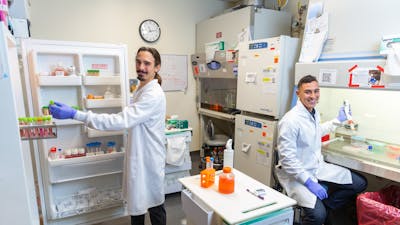
SomaCode was conceived in the lab of Wyss Core Faculty member George Church, Ph.D., whose members pride themselves on tackling big, complex problems in biological engineering. The project is led by Soufiane Aboulhouda and Oliver Dodd, both graduate students in the lab, and is advised by David Thompson, Ph.D., a Staff Scientist and member of the Advanced Technology Team at the Wyss Institute.
Impact
In 2020 SomaCode was named a Wyss Institute Validation Project in recognition of its potential for significant positive impact in the treatment of many diseases, and was renewed for a second year of Validation Project funding in 2021. Northpond Labs, the research and development-focused affiliate of venture capital firm Northpond Ventures, was impressed by the value that SomaCode could unlock in cell therapy by meeting the need for accurate cell delivery, and named the technology a Northpond Labs Project in early 2022, providing support for additional experiments to de-risk SomaCode’s technology and business strategy and carve a path for company formation. Aboulhouda and Dodd have deep experience in entrepreneurship through their roles as co-presidents and co-founders of Nucleate, a global nonprofit organization whose mission is to empower tomorrow’s biotech leaders by educating today’s academic trainees, and in doing so facilitate company formation from academic labs.