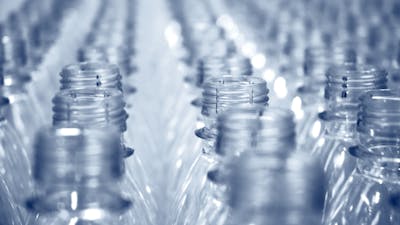
Humans have produced roughly 8,300 million metric tons of plastic since the 1950s, the vast majority of which has been thrown out as waste. Only about 9% of that plastic waste has been recycled and 12% has been incinerated, leaving 79% of it to accumulate on our land and oceans, harming the environment, the food chain and, ultimately ourselves. A growing number of “bioplastics” are available on the market today, and are largely made from cellulose, a plant-based polysaccharide material. However, these materials lack the robustness and flexibility of traditional petroleum-based plastics, and require large amounts of land to grow the plants from which the polysaccharides are derived, putting additional strain on the environment and our food supply.
We are developing better alternatives to petrochemical plastics, described below.
SPEEDR: Circular Upcycling of PET Waste into Compostable Bioplastics
Fossil fuel-derived materials and the resulting plastic waste are mounting environmental challenges, while biodegradable plastics remain expensive to produce. SPEEDR uses engineered microbes, solvent-assisted pretreatment, and enzymes to break down persistent plastic waste, absorb the resulting building blocks, and convert them into compostable PHA bioplastics. By turning low-value waste into higher-value materials, the platform could advance a more circular and sustainable plastics economy.
Circe: Transforming greenhouse gases into valuable products

The Circe (Circular industries with cellular factories) Institute Project uses engineered microbes to produce polymers that can be used to manufacture a wide variety of petrochemical products with a smaller carbon footprint and minimal environmental impact than either petroleum-based plastics or plant-based bioplastics. Rather than using sugar from acres’ worth of crops as their food source, Circe’s proprietary microbes take in carbon dioxide (CO2) and hydrogen (H2) gases and produce a class of biodegradable fatty acid polymers, which can be used in a wide variety of products ranging from packaging materials to cosmetics to clothing. These polymers are non-toxic and readily degrade in the oceans and on land.
Circe launched as a startup from the Wyss Institute in 2021. Its flagship product is a fat that is molecularly identical to cocoa butter, which could help make the chocolate industry more resilient in the face of climate change and reduce the carbon footprint of food production.
Shrilk: A degradable bioplastic derived from shrimp shells and silk protein

Shrilk is a fully degradable bioplastic made using a material called chitosan (found in shrimp shells) and a protein from silk called fibroin that mimics the microarchitecture of insects’ exoskeletons. Shrilk can be used to manufacture objects without the environmental damage caused by conventional synthetic plastics, and it rapidly biodegrades when placed in compost, releasing nitrogen-rich nutrient fertilizer. Because chitosan and fibroin are both used in FDA-approved devices, Shrilk also may be useful for creating implantable foams, films, and scaffolds for surgical closures, wound healing, tissue engineering, and regenerative medicine applications.